
Housing · Buckinghamshire · 2024–2026
Marlow Reach
A 212-unit scheme that reached 12.4% biodiversity net gain on site by moving a drainage basin at concept stage, and kept an oak that the first layout had removed.
- 212
- Units
- 12.4%
- Net gain, on site
- None
- Off-site units bought
- 11 months
- Determination
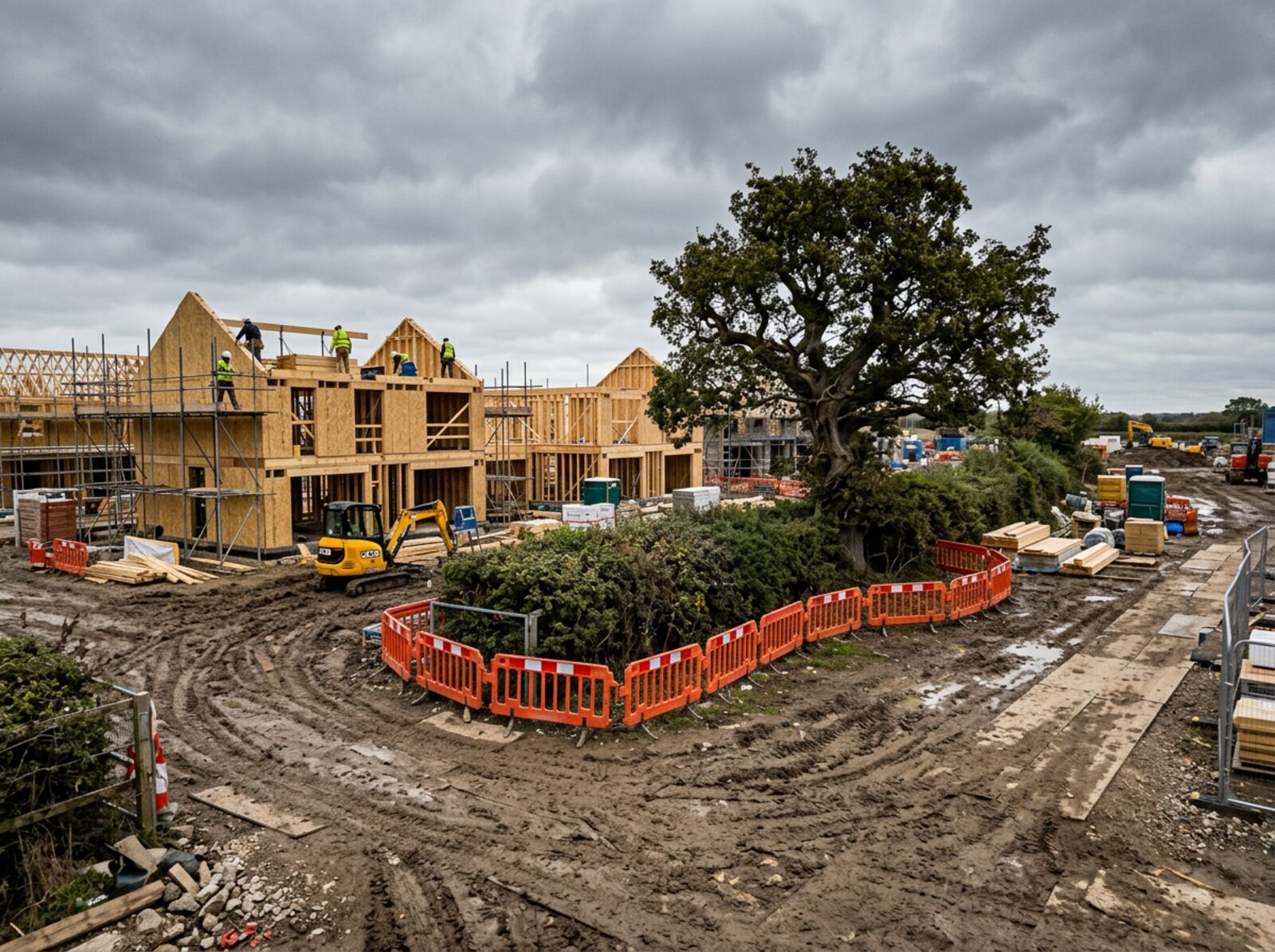
The site is 8.6 hectares of former arable on the edge of a village, with a mature hedgerow running through the middle of it and a veteran oak that the first indicative layout had shown as removed. Arable land scores very low on the biodiversity metric, which sounds like good news for a net gain calculation and is: the baseline is low, so the gain is achievable. The trap is that the low baseline tempts a designer into treating the whole site as blank.
We ran the metric on three layout options in the first month. The option the client preferred commercially achieved 6.1% — short of the 10% mandatory minimum — because the amenity space was specified as mown grass, which scores barely above arable. Changing 1.9 hectares of that to a managed meadow regime and moving the attenuation basin to the northern boundary where it could be planted as wet grassland took it to 12.4%.
The oak stayed. Its root protection area cut into three plots, and losing those three plots cost the scheme less than the off-site units it would have needed without the habitat that came with retaining it and the hedgerow either side. That is not always how the arithmetic falls, and we have advised clients to lose a tree where it did. Here it did not.
Determination took eleven months against a thirteen-month programme allowance. The ecology chapter was not the reason for any of the delay, which we mention because on the previous scheme this client brought us, it had been.
More work
Other projects
 Energy
Ridgeway Solar
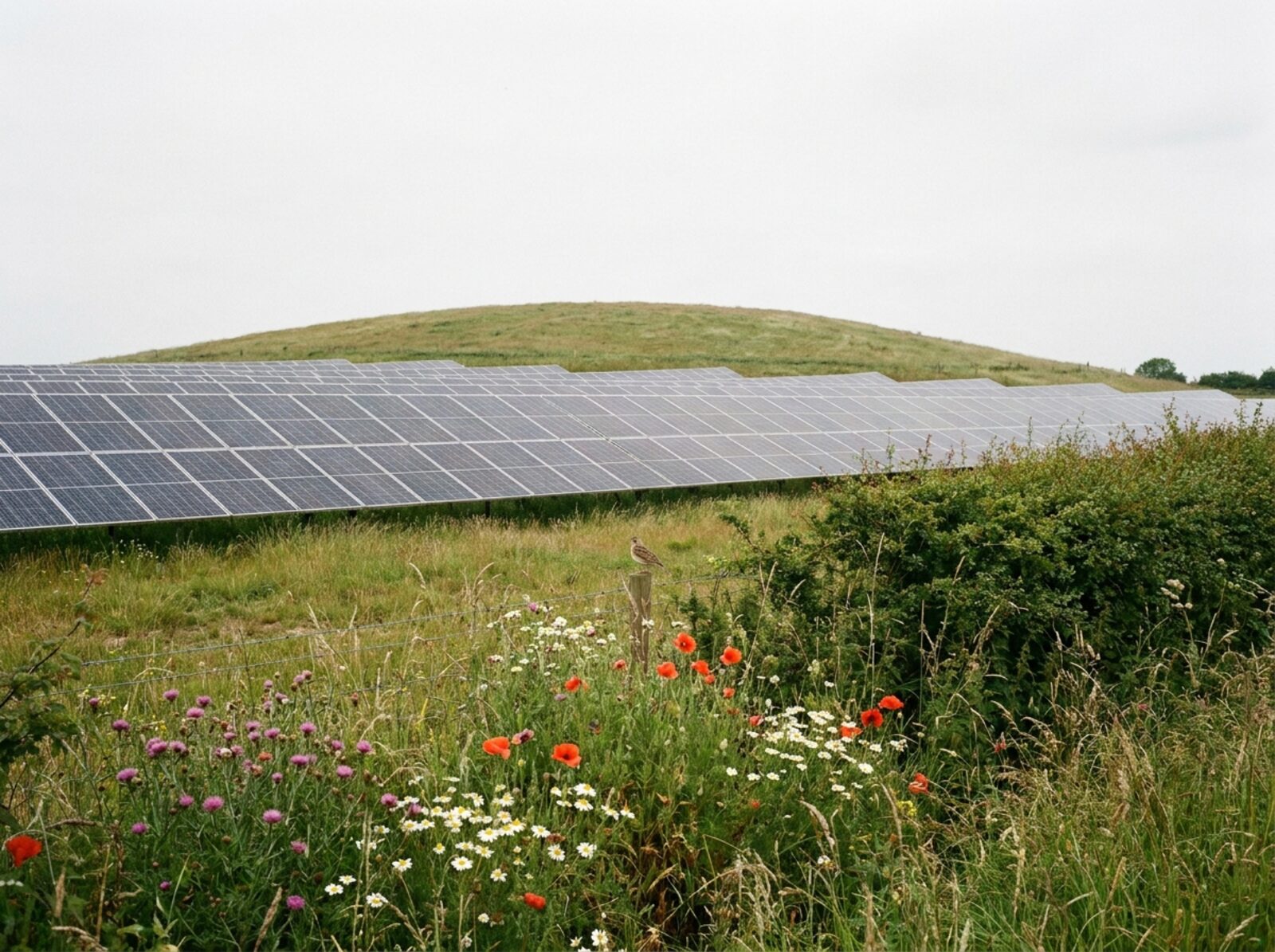
18 MW on a capped 1970s landfill. The gas risk assessment was the whole job; the ecology and glint work took three weeks.
Read more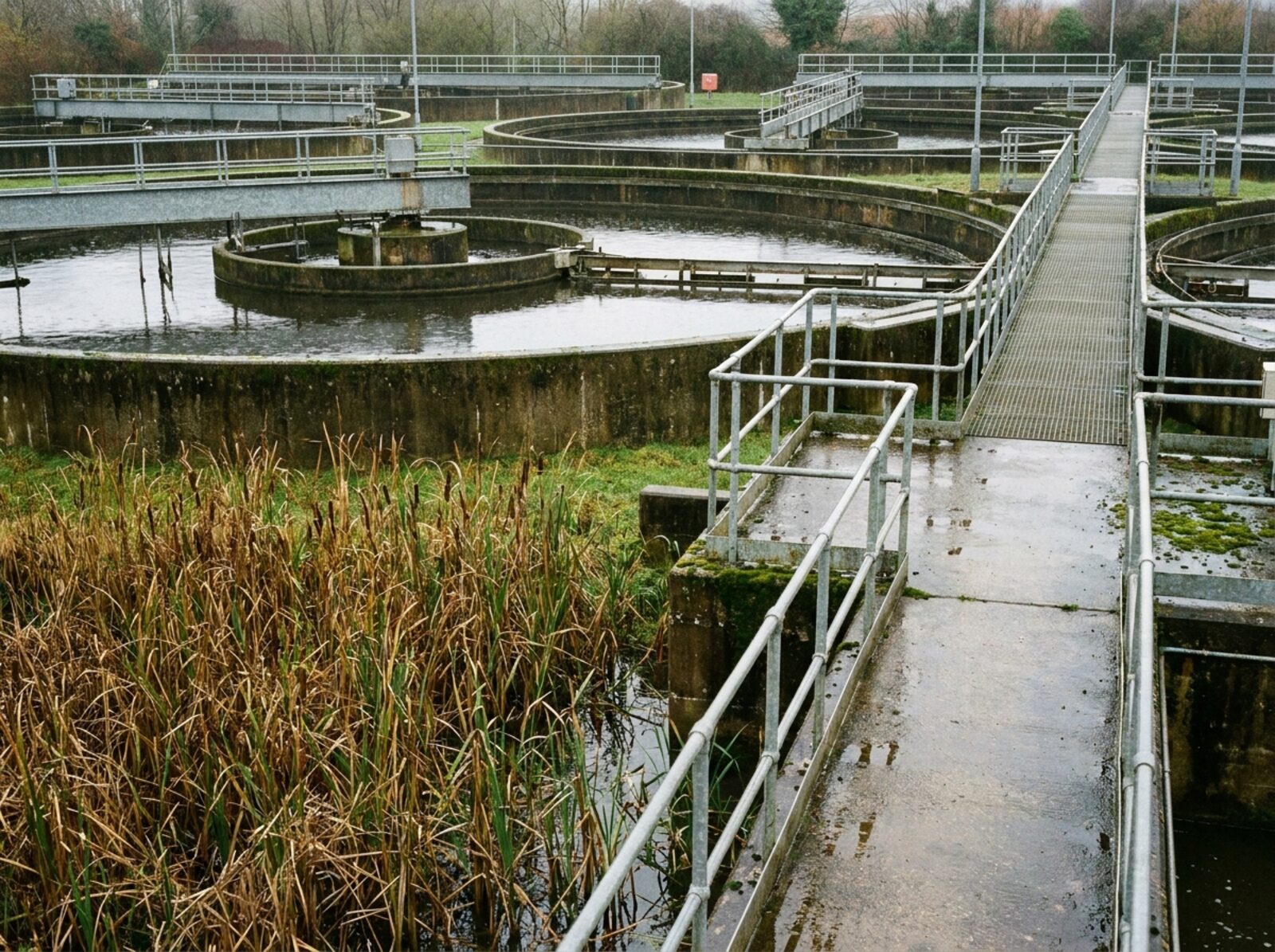 Water
Water
Kennet storm overflow
Permit variation and WFD assessment for a 14,000 m³ storm tank, delivered against an AMP deadline with four weeks of contingency and no extension of time.
Read moreGet in touch
Tell us about the site before you buy it
A twenty-minute call at option stage is the cheapest environmental advice you will ever take, and occasionally it is the advice not to proceed.