
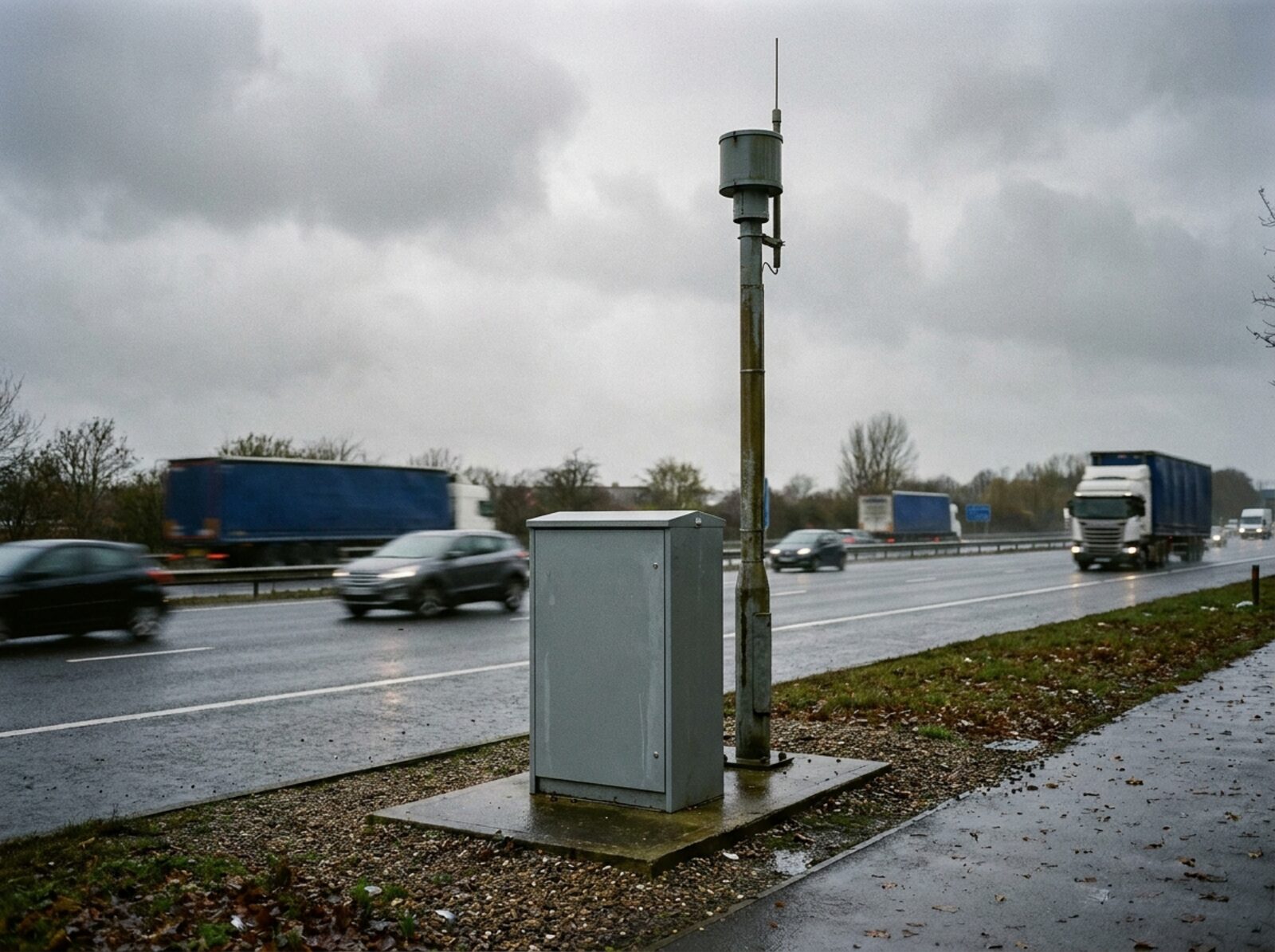
Services
Air quality & odour
Modelling with ADMS and AERMOD, monitoring with diffusion tubes and reference analysers, and an honest position on what the model can and cannot tell you.
What this involves
- ADMS 6, AERMOD
- Models
- Diffusion tubes, reference analysers
- Monitoring
- Local data or our own survey
- Verification
- IAQM, EPUK, EA H1
- Guidance
Most air quality objections to a development are about construction dust, not operational emissions, and most are avoidable at the method statement stage. We write dust assessments to the IAQM guidance and we write the mitigation as something a site manager can actually do — a wheel wash location, a haul route, a trigger for damping down — rather than a page of principles nobody reads at 7am.
For operational assessments we model with ADMS or AERMOD depending on the terrain and the receptor pattern, verified against local monitoring where a suitable station exists and against our own diffusion tube survey where it does not. Verification is where these assessments are usually weak: an unverified model in a street canyon can be out by a factor of two, and a determination made on it is a determination waiting to be judicially reviewed.
Odour is a different problem because it is a perception problem with a numerical proxy. We use the FIDOL factors and dispersion modelling to a C98, 1-hour benchmark, and we tell clients the uncomfortable truth: a scheme can comply with the benchmark and still generate complaints, and the complaints are what the planning authority will act on.
Sectors
Where we do this work
Housing & mixed use
From nine units to 1,400. Most of our work, most of our planning conditions discharged, and where biodiversity net gain bites hardest.
Industry & manufacturing
Environmental permits, BS 4142 boundary assessments, odour, and the compliance letters that follow an unannounced regulator visit.
Waste & resource
Permit applications and variations, landfill gas risk assessment, and the closure and aftercare plans that outlive everyone who wrote them.
Also from Thornfield
Other services
Ecology & biodiversity
Preliminary appraisals, protected species surveys and statutory biodiversity net gain, with the metric run before the layout is fixed rather than after.
Read moreAcoustics & vibration
BS 4142 industrial noise, BS 8233 internal levels, construction noise to BS 5228, and vibration to BS 6472 with the measurements to back it.
Read moreLand & groundwater
Phase 1 desk studies, intrusive investigation, remediation strategies and verification, plus hydrogeological risk assessment for the Environment Agency.
Read moreGet in touch
Tell us about the site before you buy it
A twenty-minute call at option stage is the cheapest environmental advice you will ever take, and occasionally it is the advice not to proceed.